
Reader's Place - November 2026
National Native American Heritage Month is celebrated each November to highlight and honor our Indigenous people and legacy. Here are some recent fiction and non-fiction titles, plus a couple of classics, for diving into our deep and diverse Native American heritage.
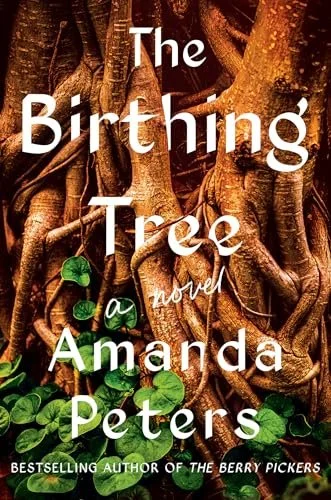
The Birthing Tree, by Amanda Peters (Catalog)
From the author of The Berry Pickers, an unforgettable novel of family, legacy, and the secrets that bind and endanger us, following one woman as she confronts buried truths, memories of passionate young love, and the fragile future she alone must protect. Spanning decades of loss and reclamation, this sweeping yet intimate novel follows one woman’s journey to protect the land, the traditions, and the memory of the women who came before her—and to decide which parts of her inheritance she will carry into the future.
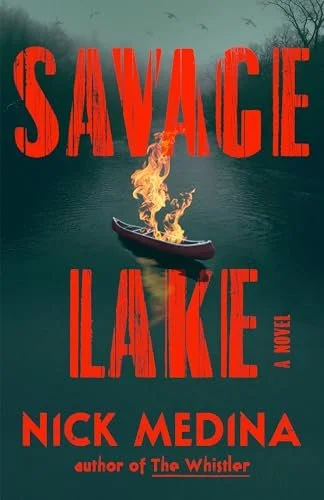
Savage Lake, by Nick Medina (Catalog)
Nell Marin swore she would never return to the place where part of her died. The passing of her estranged father, however, leaves her with no choice but to take her teenage son, Oscar, back to the run-down family cabin on Torchlight Lake, where horrific memories linger. The two will fix the place up, sell it, and ensure Nell never has to return to that dreaded lake again. But when the roads—which pass through Native land—are barricaded by the local Tribe, the quick trip turns into weeks. Oscar, a horror movie buff, knows this is exactly how it starts. As the long summer days drag on, unsettling things begin to occur: screams ring out over the water and a mysterious figure watches the cabin from the trees at night. Most disturbing of all, his mother is becoming less and less herself. As the strange events lead Oscar to uncover the secrets Nell has shielded him from, he is forced to confront a reality that is far more frightening than movie monsters. He must uncover answers to the questions that stole so much from his mother…before the horror that traumatized Nell drags him under as well.
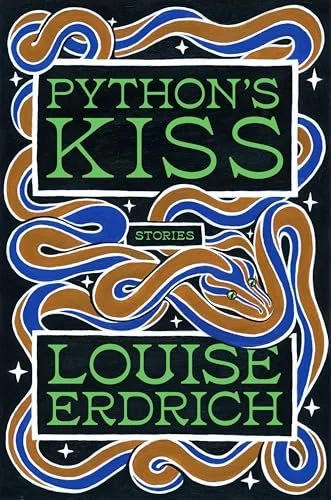
Python’s Kiss: Stories, by Louise Erdrich (Catalog)
In Ojibwe mythology, Mishipeshu, a reptile with the head of a cat, stands sentinel at the gates of the underworld, where the mortal becomes eternal. Louise Erdrich’s remarkable story collection navigates this terrain where life and death are inextricably entwined. Python’s Kiss probes the essence of our humanity in moments both intimate and grand, inviting us to consider the nature of existence; the wonder, bravery, shame, loneliness, yearning, and terror that drive and define us. Featuring wives and husbands, spirit animals, ghosts, and talismans, betrayals and secrets, an artificial afterlife and a dangerous teenage game, Erdrich’s stories, at once intimate and universal, conjure up narrative worlds which capture our beauty and pain. Python’s Kiss is a gift from one of our greatest chroniclers of human fallibility and nobility, an imaginative and perceptive storyteller whose generosity of vision, wit, and lyricism sing from every page.
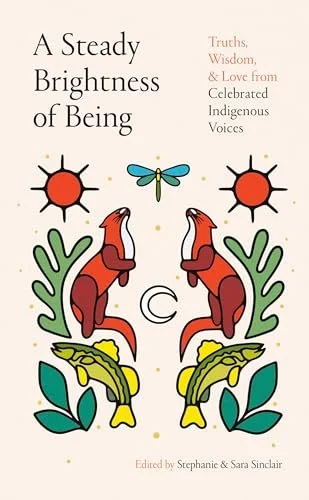
A Steady Brightness of Being: Truths, Wisdom, and Love from Celebrated Indigenous Voices, edited by Sara Sinclair and Stephanie Sinclair (Catalog)
Drawing on the wisdom and personal experience of its esteemed contributors, this first-of-its-kind anthology tackles complex questions of our times to provide a rich tapestry of Indigenous life, past, present, and future. These peace offerings—to settlers, to one another, to listeners—explore the histories that have brought us to this moment, the challenges and crises faced by present-day communities, and the visions that will lead us to a new architecture for thinking about Indigeneity.
Including contributions from film actress and television writer Tamara Podemski, Governor General's Award-winning author David A. Robertson, and arts journalist Jesse Wente, and taking its structure from the medicine bundle—tobacco, sage, cedar, and sweetgrass—this beautiful collection will stir and empower listeners, as well as enrich an essential and ongoing conversation about what reconciliation looks like and what it means to be Indigenous today.
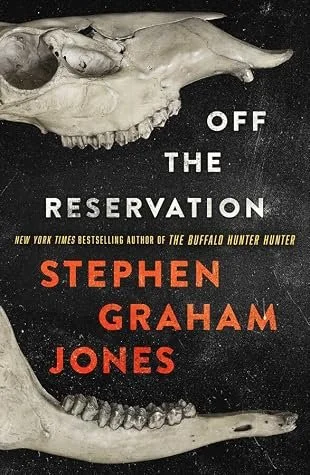
Off the Reservation, by Stephen Graham Jones (Catalog)
A ragtag group of activists sets out to repatriate the bones of a Blackfeet boy taken to the infamous Carlisle Indian Industrial School in author Stephen Graham Jones’s return to the Blackfeet reservation. Five years have passed since the massacre on the Blackfeet reservation in The Only Good Indians. Nathan Yellow Tail, one of the survivors of the revenge murders, finds himself in the hospital after a terrible accident that should’ve killed him and that nearly killed his best friend, Sebby, who is hanging on to life in a room a few doors down. Nate’s life is out of balance, so when he is given the chance to reset his life, and maybe save Sebby in the process, Nate steps up, again. This time it’s into a camper van that is almost as run down as his broken body, filled with three older Blackfeet, to find the bones of the lone Blackfeet boy who died at the Carlisle Indian Industrial School—where many Indigenous children were abused—and repatriate this boy home. The problem is, when they get the bones, something terrible has escaped with them.
By turns terrifying and deeply moving, Off the Reservation is a haunting American Indian novel of survival, reckoning, and redemption, shining light on the dark corners of this country’s history while also showing the desperate choices people make when they’re put up against a wall.
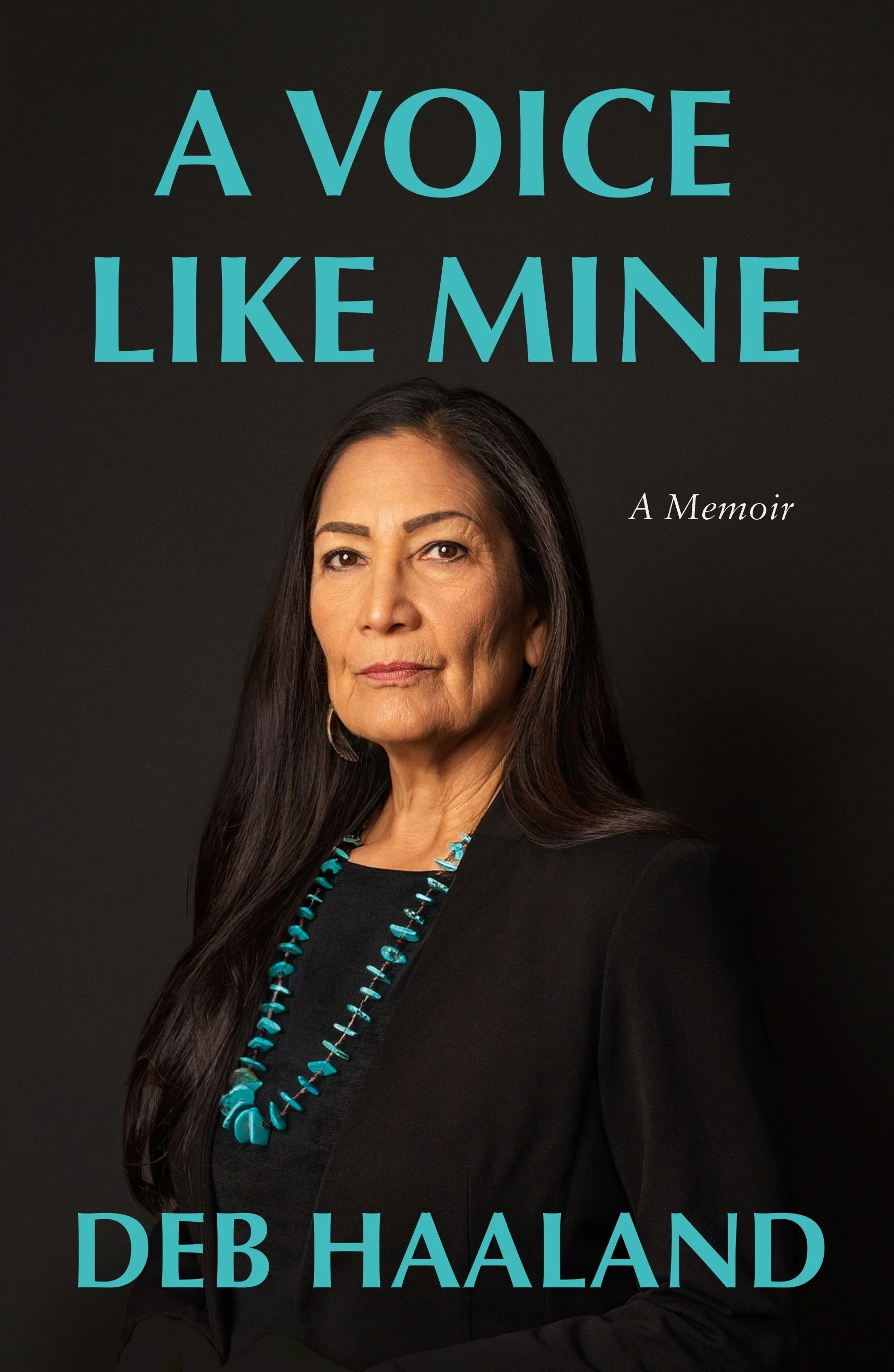
A Voice Like Mine: A Memoir, by Deb Haaland (Catalog)
Nothing about Deb Haaland’s upbringing or family history set her up for a life of the first Native American woman elected to chair a state political party in the United States; one of the first two Native American women elected to Congress; the first Native American to serve in a presidential cabinet. Yet Haaland has embraced every opportunity, knowing that each step forward lifts up those who are too often left out of the conversation.
A 35th-generation New Mexican and member of the Pueblo of Laguna, Haaland has lived a remarkable life shaped by poverty, alcoholism, and single parenthood. After a late but meteoric rise in politics, she stepped down from her cabinet position as Secretary of the Interior in January 2025 and is now running for Governor of New Mexico in the 2026 election.
In A Voice Like Mine—titled after Haaland’s congressional campaign slogan, “Congress has never heard a voice like mine”—she shares the personal history that shaped her courage to organize, run for office, and lead. She tells the stories that have defined her life in politics and beyond, from her grandfather’s cornfield, where she learned the importance of hard work and care for the earth, to the oak-paneled halls of Washington, D.C. Throughout her journey, Haaland has drawn on her heritage in her activism and service, leading with humility, purpose, and a commitment to “leave the ladder down” for those who follow.
The Savage Mind: An American Legacy, by David Treuer (Catalog)
A searing exploration of American violence, interweaving memoir, history, and reportage to reveal the wound at the heart of our nation―and to offer hope that the country, and we, might be healed. In the wake of George Floyd’s murder and the January 6 insurrection, as America seemed to be falling apart, David Treuer decided to hold himself and his family together the only way he knew he sat down to write a letter. What resulted is “The Savage Mind,” the most personal and powerful work of his storied literary career.How do we understand America, ourselves, and the impulses that seem intent on destroying both? Ranging from Treuer’s upbringing on the Leech Lake reservation in Minnesota to the experiences of his parents, a Jewish Holocaust refugee and the first American Indigenous woman judge, The Savage Mind reveals the terrifying essence of our frontier violence, which has defined our country, our culture, and our very selves. The frontier, Treuer shows, was a site of epic, phantasmagoric bloodshed, initiated by white settlers but perpetuated by all of us. And after the geographic frontier closed in the late 19th century, it did not vanish―quite the opposite. Today, Treuer explains, America’s frontier―and all its violent pathologies―has migrated overseas and into our hearts and minds. The atrocities in Gaza and the school shootings in the American heartland are bound together by this invisible filament―one that Treuer makes visible in The Savage Mind, and which he offers hope for weaving, once and for all, into a better cloth.
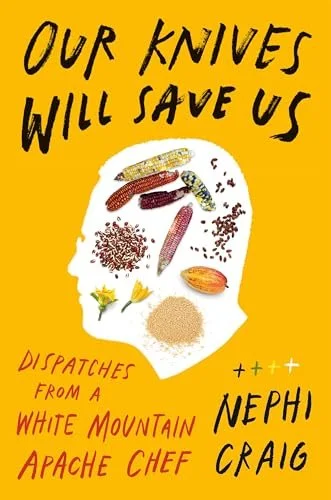
Our Knives Will Save Us: Dispatches from a White Mountain Apache Chief, by Nephi Craig (Catalog)
From Indigenous chef Nephi Craig, a searing personal and cultural reckoning about the power of food to heal intergenerational wounds. When Nephi Craig enrolled in the culinary program at Scottsdale Community College, it was out of necessity after a felony arrest led to a judge’s work or prison. Expecting little more than a means to an end, he quickly discovered a talent and passion for cooking. He also experienced a profound dissonance as the only Indigenous person in the kitchen, preparing European recipes that—disguised by their French and Italian names—relied on ingredients native to the Americas. This experience, along with his roaming childhood on the White Mountain Apache and Navajo reservations, led him to trace the buried histories of Indigenous cultivars such as tomato, cacao, and amaranth, each one a portal into possibility as well as a marker of the violent legacy of colonization. Craig’s mission to build Indigenous food sovereignty and to showcase Native peoples’ rich cuisines led him around the world, from top fine-dining restaurants in the United States to high-profile banquets in Brazil, England, Germany, and Japan. All the while, though, Craig wrestled with addiction, entering one treatment center after another in the hopes that he could get—and remain—sober. In the heat, frenzy, and collaborative energy of restaurant kitchens, Craig found a lifeline. But when he was faced with the difficult decision of choosing between a career-defining executive chef job and an opportunity to serve his community back on the Rez, he realized his true vocation. Interweaving personal reflection with searing cultural insight, Craig lays bare the ongoing traumas wrought by colonial violence as well as the power in claiming our own ancestral intelligence. His book offers a vision of one where food is decolonized, history is honored, and healing is possible.
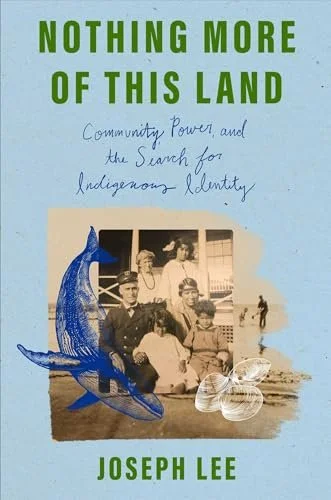
Nothing More of This Land: Community, Power, and the Search for Indigenous Identity, by Joseph Lee (Catalog)
From award-winning journalist Joseph Lee, a sweeping, personal exploration of Indigenous identity and the challenges facing Indigenous people around the world. Before Martha’s Vineyard became one of the most iconic vacation destinations in the country, it was home to the Wampanoag people. Today, as tourists flock to the idyllic beaches, the island has become increasingly unaffordable for tribal members, with nearly three-quarters now living off-island. Growing up Aquinnah Wampanoag, journalist Joseph Lee grappled with what this situation meant for his tribe, how the community can continue to grow, and more broadly, what it means to be Indigenous.
In Nothing More of This Land Lee weaves his own story and that of his family into a panoramic narrative of Indigenous life around the world. He takes us from the beaches of Martha’s Vineyard to the icy Alaskan tundra, the smoky forests of Northern California to the halls of the United Nations, and beyond. Along the way he meets activists fighting to protect their land, families clashing with their own tribal leaders, and communities working to reclaim tradition. Together, these stories reject stereotypes to show the diversity of Indigenous people today and chart a way past the stubborn legacy of colonialism.
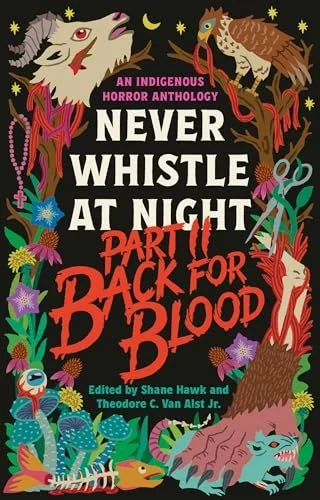
Back for Blood: Never Whistle at Night Part II: An Indigenous Horror Anthology, ed. by Shane Hawk and Theodore C. Van Alst, Jr. (Catalog)
As any savvy horror fan the monster never truly dies. The team that brought you the bestselling dark fiction anthology Never Whistle at Night has risen, hungry, from the grave to summon more dark delicacies for your delectation. In these twenty-one brand-new, groundbreaking, gruesome stories—authored by both established and newly unearthed Indigenous talent and illustrated by renowned Cheyenne and Arapaho painter Brent Learned—the contributors are fully embracing both supernatural horrors and the everyday horror of living under colonialist rule.
Featuring stories of unspeakable yet satisfying terror, from twisted psychological tales to gore-filled monster hunts, this new selection of sinister stories will sate your darkest appetites and leave you slavering for more. Never Whistle at Night, Part II: Back for Blood is a further celebration of Indigenous survival and the enduring tradition of transforming adversity into art.
An Indigenous Peoples’ History of the United States, by Roxanne Dunbar-Ortiz (Catalog)
The first history of the United States told from the perspective of indigenous peoples: today in the United States, there are more than five hundred federally recognized Indigenous nations comprising nearly three million people, descendants of the fifteen million Native people who once inhabited this land. The centuries-long genocidal program of the US settler-colonial regimen has largely been omitted from history. Now, for the first time, acclaimed historian and activist Roxanne Dunbar-Ortiz offers a history of the United States told from the perspective of Indigenous peoples and reveals how Native Americans, for centuries, actively resisted expansion of the US empire. Spanning more than four hundred years, this classic bottom-up peoples’ history radically reframes US history and explodes the silences that have haunted our national narrative.
Wandering Stars, by Tommy Orange (Catalog)
The eagerly awaited follow-up to Pulitzer Prize-finalist Tommy Orange’s breakout best seller There There — “Wandering Stars” traces the legacies of the Sand Creek Massacre of 1864 and the Carlisle Indian Industrial School through to the shattering aftermath of Orvil Red Feather’s shooting in There There. Extending his constellation of narratives into the past and future, Tommy Orange once again delivers a story that is by turns shattering and wondrous, a book piercing in its poetry, sorrow, and rage—a masterful follow-up to his already-classic first novel, and a devastating indictment of America’s war on its own people.
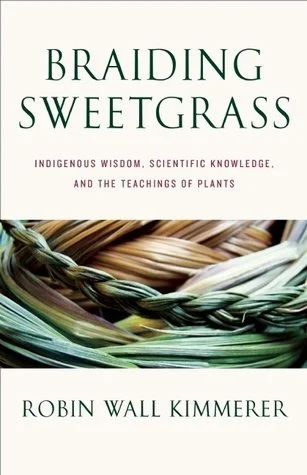
Braiding Sweetgrass: Indigenous Wisdom, Scientific Knowledge, and the Teachings of Plants, by Robin Wall Kimmerer (Catalog)
As a botanist, Robin Wall Kimmerer has been trained to ask questions of nature with the tools of science. As a member of the Citizen Potawatomi Nation, she embraces the notion that plants and animals are our oldest teachers. In Braiding Sweetgrass, Kimmerer brings these lenses of knowledge together to show that the awakening of a wider ecological consciousness requires the acknowledgment and celebration of our reciprocal relationship with the rest of the living world. For only when we can hear the languages of other beings are we capable of understanding the generosity of the earth, and learning to give our own gifts in return.

Coexistence: Stories, by Billy-Ray Belcourt (Catalog)
Superbly rendered portraits of modern indigeneity from the acclaimed author of A Minor Chorus. A grieving mother calls out to her faraway son. A student forgoes the lurid appeal of dating apps in exchange for a painter’s love. The anonymous voices of queer native men converge amid violent eroticism. A man just out of prison balances the uneasy weight of family and freedom, while a professor returns home to conduct research only to be haunted by the ghost of a nun. The stories and voices in Billy-Ray Belcourt’s debut story collection, Coexistence, are buoyed by philosophical undergirding, poetic demand, and the complex relationship between aesthetics and ethics. Belcourt pirouettes through the short-story form in his signature staccato voice, imagining a range of characters from all walks of native life. He is an expert in celebrating the ways indigenous peoples make total conquest impossible.
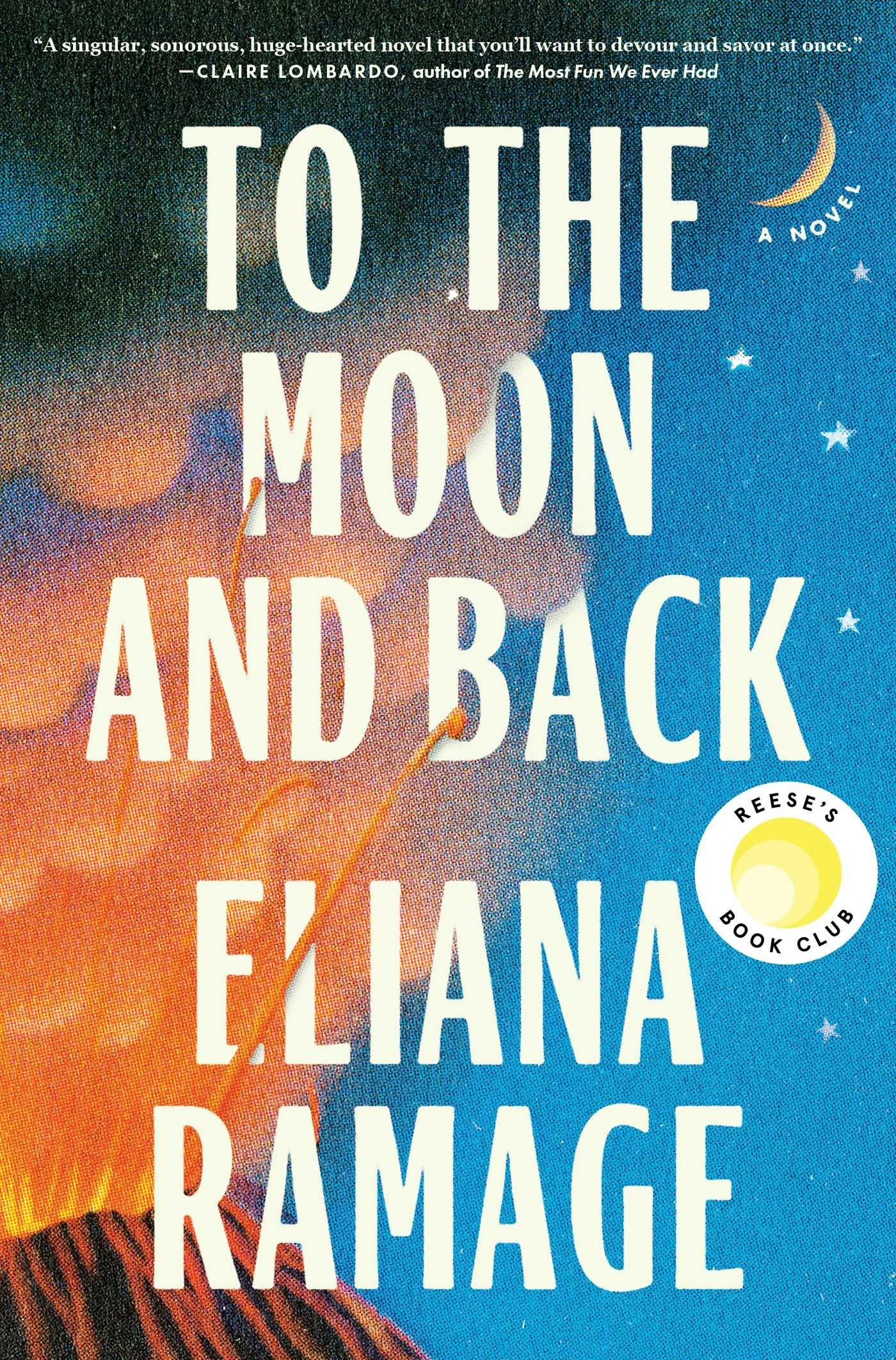
To the Moon and Back, by Eliana Ramage (Catalog)
In this dazzlingly powerful coming-of-age story about family, ambition, and belonging, one young woman’s obsessive quest to become the first Cherokee astronaut irrevocably alters the fates of the people she loves most. From a simulated Mars habitat on a Hawaiian volcano, to a house in the Ozark foothills in Cherokee Nation, to a pressurized research station on the floor of the Atlantic and beyond, Steph Harper will stretch her bonds with each of the women in her life to the point of breaking, driving them to reconsider their own deepest desires in her shadow. An awe-inspiringly epic novel of mothers and daughters, sisters and sacrifice, love and loss, terror and wonder, To the Moon and Back is the “wondrous and deeply moving” (Booklist, starred review) story of one astronaut’s most surprising how deeply she loves life on earth.
— Compiled by Louis Muñoz