
Reader's Place: Juneteenth
Juneteenth and other Emancipation Day celebrations, as told through photographs, art, and engrossing narratives from award-winning writers.
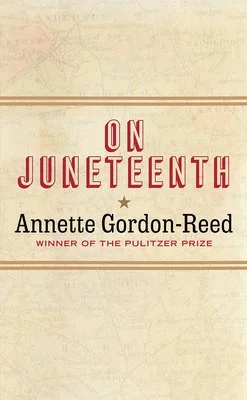
On Juneteenth, by Annette Gordon-Reed (Catalog, Hoopla)
Weaving together American history, dramatic family chronicle, and searing episodes of memoir, Annette Gordon-Reed’s “On Juneteenth” provides a historian’s view of the country’s long road to Juneteenth, recounting both its origins in Texas and the enormous hardships that African-Americans have endured in the century since, from Reconstruction through Jim Crow and beyond. All too aware of the stories of cowboys, ranchers, and oilmen that have long dominated the lore of the Lone Star State, Gordon-Reed—herself a Texas native and the descendant of enslaved people brought to Texas as early as the 1820s—forges a new and profoundly truthful narrative of her home state, with implications for us all.
Combining personal anecdotes with poignant facts gleaned from the annals of American history, Gordon-Reed shows how, from the earliest presence of Black people in Texas to the day in Galveston on June 19, 1865, when Major General Gordon Granger announced the end of legalized slavery in the state, African-Americans played an integral role in the Texas story.
Reworking the traditional “Alamo” framework, she powerfully demonstrates, among other things, that the slave- and race-based economy not only defined the fractious era of Texas independence but precipitated the Mexican-American War and, indeed, the Civil War itself.
In its concision, eloquence, and clear presentation of history, “On Juneteenth” vitally revises conventional renderings of Texas and national history. Especially now that the U.S. recognizes Juneteenth (June 19) as a national holiday, “On Juneteenth” is both an essential account and a stark reminder that the fight for equality is exigent and ongoing.
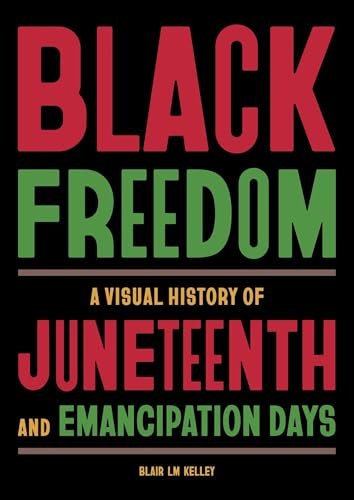
Black Freedom: A Visual History of Juneteenth and Emancipation Days, by Blair LM Kelley (Catalog)
The first fully illustrated history of Juneteenth and other Emancipation Day celebrations, told through photographs, art, and an engrossing narrative from an award-winning historian.
For more than 150 years, Black communities have gathered to honor freedom, resilience, and the ongoing struggle for true liberation. While Juneteenth has recently gained wider recognition, it was one of many Emancipation Day traditions celebrated across the United States. These observances were spaces of joy, remembrance, and resistance—even as the fight for full freedom was unfinished. This volume brings together stirring essays and striking images from Juneteenth and beyond, offering a sweeping portrait of how Black people have created and sustained rituals of remembrance, a testament to the generations who, through celebration and storytelling, demanded that their contributions to the making of America be fully recognized.
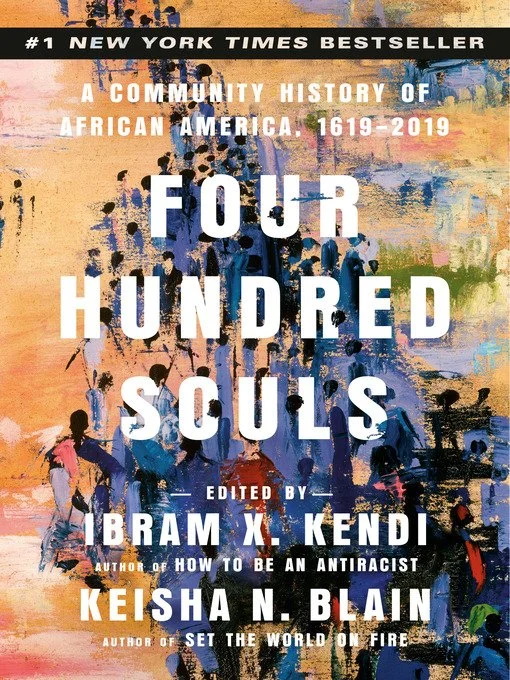
Four Hundred Souls: A Community History of African America, 1619-2019, by Ibram X. Kendi and Keisha N. Blain (Catalog)
An epoch-defining history of African America, the first to appear in a generation, “Four Hundred Souls” is a chronological account of four hundred years of Black America as told by ninety of America's leading Black writers.
Curated by Ibram X. Kendi, author of the number one bestseller “How To Be an Antiracist,” and fellow historian Keisha N. Blain, “Four Hundred Souls” begins with the arrival of twenty enslaved Ndongo people on the shores of the British colony in mainland America in 1619, the year before the arrival of the Mayflower. In eighty chronological chapters, the book charts the tragic and triumphant four-hundred-year history of Black American experience in a choral work of exceptional power and beauty.
Contributors include some of the best-known scholars, writers, historians, journalists, lawyers, poets and activists of contemporary America who together bring to vivid life countless new facets to the drama of slavery and resistance, segregation and survival, migration and self-discovery, cultural oppression and world-changing artistic, literary and musical creativity. In these pages are dozens of extraordinary lives and personalities, rescued from the archives and restored to their rightful place in America's narrative, as well as the ghosts of millions more.
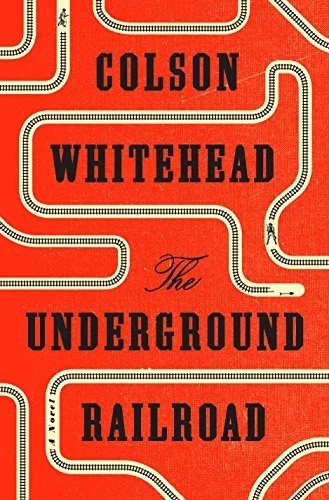
The Underground Railroad, by Colson Whitehead (Catalog)
Winner of the Pulitzer Prize and the National Book Award, the #1 New York Times bestseller from Colson Whitehead, a magnificent tour de force chronicling a young slave's adventures as she makes a desperate bid for freedom in the antebellum South.
Cora is a slave on a cotton plantation in Georgia. Life is hell for all the slaves, but especially bad for Cora; an outcast even among her fellow Africans, she is coming into womanhood—where even greater pain awaits. When Caesar, a recent arrival from Virginia, tells her about the Underground Railroad, they decide to take a terrifying risk and escape. Matters do not go as planned—Cora kills a young white boy who tries to capture her. Though they manage to find a station and head north, they are being hunted.
In Whitehead’s ingenious conception, the Underground Railroad is no mere metaphor—engineers and conductors operate a secret network of tracks and tunnels beneath the Southern soil. Cora and Caesar’s first stop is South Carolina, in a city that initially seems like a haven. But the city’s placid surface masks an insidious scheme designed for its black denizens. And even Ridgeway, the relentless slave catcher, is close on their heels. Forced to flee again, Cora embarks on a harrowing flight, state by state, seeking true freedom.
Like the protagonist of “Gulliver’s Travels,” Cora encounters different worlds at each stage of her journey—hers is an odyssey through time as well as space. As Whitehead brilliantly re-creates the unique terrors for black people in the pre–Civil War era, his narrative seamlessly weaves the saga of America from the brutal importation of Africans to the unfulfilled promises of the present day. “The Underground Railroad” is at once a kinetic adventure tale of one woman’s ferocious will to escape the horrors of bondage and a shattering, powerful meditation on the history we all share.
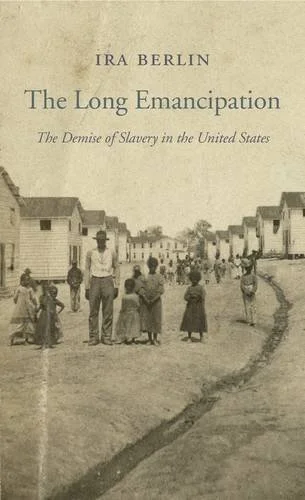
The Long Emancipation: The Demise of Slavery in the United States, by Ira Berlin (Catalog)
Perhaps no event in American history arouses more impassioned debate than the abolition of slavery. Answers to basic questions about who ended slavery, how, and why remain fiercely contested more than a century and a half after the passage of the Thirteenth Amendment. In “The Long Emancipation,” Ira Berlin draws upon decades of study to offer a framework for understanding slavery’s demise in the United States. Freedom was not achieved in a moment, and emancipation was not an occasion but a near-century-long process―a shifting but persistent struggle that involved thousands of men and women.
Berlin teases out the distinct characteristics of emancipation, weaving them into a larger narrative of the meaning of American freedom. The most important factor was the will to survive and the enduring resistance of enslaved black people themselves. In striving for emancipation, they were also the first to raise the crucial question of their future status. If they were no longer slaves, what would they be? African Americans provided the answer, drawing on ideals articulated in the Declaration of Independence and precepts of evangelical Christianity. Freedom was their inalienable right in a post-slavery society, for nothing seemed more natural to people of color than the idea that all Americans should be equal.
African Americans were not naive about the price of their idealism. Just as slavery was an institution initiated and maintained by violence, undoing slavery also required violence. Freedom could be achieved only through generations of long and brutal struggle.
Stony the Road: Reconstruction, White Supremacy, and the Rise of Jim Crow, by Henry Louis Gates, Jr. (Catalog)
The abolition of slavery in the aftermath of the Civil War is a familiar story, as is the civil rights revolution that transformed the nation after World War II. But the century in between remains a mystery: if emancipation sparked a new birth of freedom in Lincoln's America, why was it necessary to march in Martin Luther King, Jr.'s America? Henry Louis Gates, Jr., one of our leading chroniclers of the African-American experience, seeks to answer that question in a history that moves from the Reconstruction Era to the nadir of the African-American experience under Jim Crow, through to World War I and the Harlem Renaissance.
Through his close reading of the visual culture of this tragic era, Gates reveals the many faces of Jim Crow and how, together, they reinforced a stark color line between white and black Americans. Bringing a lifetime of wisdom to bear as a scholar, filmmaker, and public intellectual, Gates uncovers the roots of structural racism in our own time, while showing how African Americans after slavery combatted it by articulating a vision of a New Negro to force the nation to recognize their humanity and unique contributions to America as it hurtled toward the modern age.
The story Gates tells begins with great hope, with the Emancipation Proclamation, Union victory, and the liberation of nearly 4 million enslaved African-Americans. Until 1877, the federal government, goaded by the activism of Frederick Douglass and many others, tried at various turns to sustain their new rights. But the terror unleashed by white paramilitary groups in the former Confederacy, combined with deteriorating economic conditions and a loss of Northern will, restored home rule to the South. The retreat from Reconstruction was followed by one of the most violent periods in our history, with thousands of black people murdered or lynched and many more afflicted by the degrading impositions of Jim Crow segregation.
An essential tour through one of America's fundamental historical tragedies, “Stony the Road” is also a story of heroic resistance, as figures such as W. E. B. Du Bois and Ida B. Wells fought to create a counter-narrative, and culture, inside the lion's mouth. As sobering as this tale is, it also has within it the inspiration that comes with encountering the hopes our ancestors advanced against the longest odds.
America, U.S.A.: How Race Shadows the Nation’s Anniversaries, by Eddie S. Glaude Jr. (Catalog)
Celebrated public intellectual Eddie S. Glaude, Jr. returns with a groundbreaking book about the vicious cycles of American history and the country’s enduring refusal to face its true nature—especially at the moments when national anniversaries steer us back toward the mythology meant to disguise the truth.
“America, U.S.A.,” deliberately formulated and beautifully written, details a heart-wrenching exploration of America’s legacy. It is a magnificently complex combination of voices and lessons that, together, paint a sprawling and honest tableau of the United States, its complicated past, and ever more tenuous future. Glaude’s is a powerful voice of conscience in our tumultuous world, and his writing will undoubtedly leave you reeling yet ready for more. He pulls no punches, calling on us to interrogate our conceptions of innocence and freedom and the stories we tell ourselves about our past and present.
Centered around the major celebrations of America’s birthday across 250 years of history, the book offers a riveting look at the battles over who has a stake in the American story. Devastatingly candid, profoundly moving, and deeply reflective, “America, U.S.A.” is a shining meditation on how we might reckon with a grim past in order to strive for the better angels of our future.

The Sweetness of Water, by Nathan Hill (Catalog)
In the waning days of the Civil War, brothers Prentiss and Landry—freed by the Emancipation Proclamation—seek refuge on the homestead of George Walker and his wife, Isabelle. The Walkers, wracked by the loss of their only son to the war, hire the brothers to work their farm, hoping through an unexpected friendship to stanch their grief. Prentiss and Landry, meanwhile, plan to save money for the journey north and a chance to reunite with their mother, who was sold away when they were boys.
Parallel to their story runs a forbidden romance between two Confederate soldiers. The young men, recently returned from the war to the town of Old Ox, hold their trysts in the woods. But when their secret is discovered, the resulting chaos unleashes convulsive repercussions on the entire community. In the aftermath of so much turmoil, it is Isabelle who emerges as an unlikely leader, proffering a healing vision for the land and for the newly free citizens of Old Ox.
With candor and sympathy, debut novelist Nathan Harris creates an unforgettable cast of characters, depicting Georgia in the violent crucible of Reconstruction. Equal parts beauty and terror, as gripping as it is moving, “The Sweetness of Water” is an epic whose grandeur locates humanity and love amid the most harrowing circumstances.
A Black Women’s History of the United States, by Daina Ramey Berry and Kali Nicole Gross (Catalog, Hoopla)
A vibrant and empowering history that emphasizes the perspectives and stories of African American women to show how they are--and have always been--instrumental in shaping our country
In centering Black women's stories, two award-winning historians seek both to empower African American women and to show their allies that Black women's unique ability to make their own communities while combatting centuries of oppression is an essential component in our continued resistance to systemic racism and sexism. Daina Ramey Berry and Kali Nicole Gross offer an examination and celebration of Black womanhood, beginning with the first African women who arrived in what became the United States to African American women of today.
“A Black Women's History of the United States” reaches far beyond a single narrative to showcase Black women's lives in all their fraught complexities. Berry and Gross prioritize many voices: enslaved women, freedwomen, religious leaders, artists, queer women, activists, and women who lived outside the law. The result is a starting point for exploring Black women's history and a testament to the beauty, richness, rhythm, tragedy, heartbreak, rage, and enduring love that abounds in the spirit of Black women in communities throughout the nation.
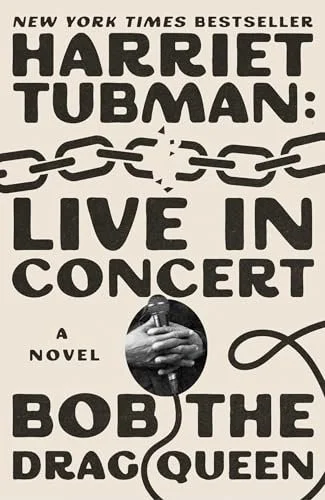
Harriet Tubman: Live in Concert, by Bob the Drag Queen (Catalog)
From RuPaul’s Drag Race winner, Traitors contestant, and host of HBO’s We’re Here comes an inventive, wondrous novel about American hero Harriet Tubman that remixes history into a fresh, dynamic novel about love, freedom, salvation, and hip-hop.
In an age of miracles where our greatest heroes from history have magically, unexplainably returned to shake us out of our confusion and hate, Harriet Tubman is back, and she has a lot to say.
Harriet Tubman and four of the enslaved persons she led to freedom want to tell their story in a unique way. Harriet wants to create a hip-hop album and live show about her life, and she needs a songwriter to help her.
She calls upon Darnell, a once successful hip-hop producer who was topping the charts before being outed on a BET talk show. Darnell has no idea what to expect when he steps into the studio with Harriet, only that they have a short period of time to write a legendary album she can take on the road. Over the course of their time together, they not only create music that will take the country by storm, but confront the horrors of both their pasts, and learn to find a way to a better future.
Original, evocative, and historic, “Harriet Live in Concert” is a landmark achievement that will burrow deep into our hearts (and ears).
Compiled by Louis Muñoz.