
Readers' Place: September 2026
Hispanic Heritage Month runs September 15 through October 15. This year’s theme is “Unidos, somos más,” “Together, We Are More.” We hope the following list of recent books inspires you to explore the many diverse voices from the Spanish-speaking parts of our country and from Latin America.
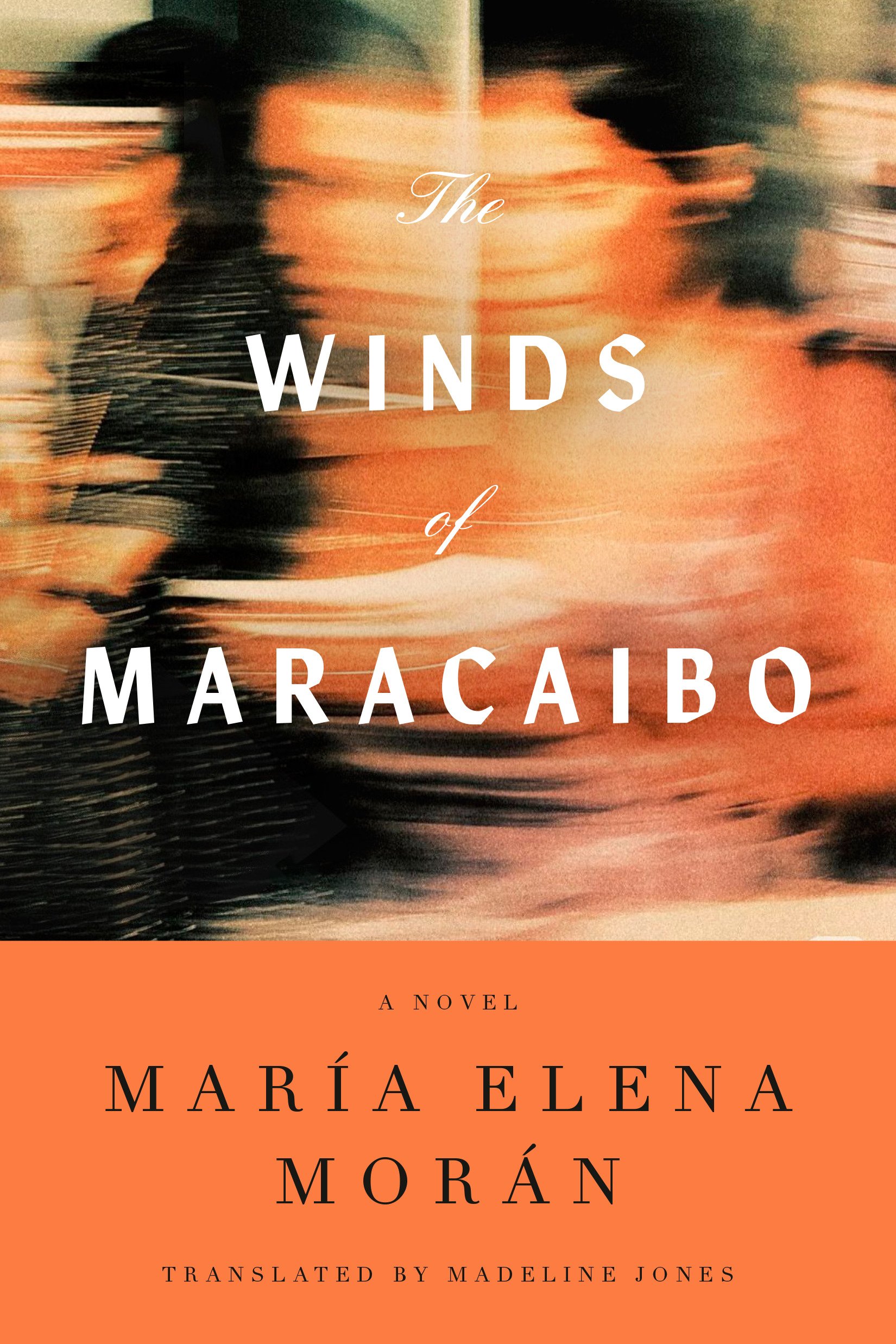
The Winds of Maracaibo, by María Elena Morán, translated by Madeline Jones (Library Catalog)
A propulsive family drama, the story of a woman determined to recover her kidnapped daughter in the ruins of Chávez’s social revolution—the fast-paced English-language debut of an award-winning and bestselling author that brings the Venezuelan migrant crisis to life in lyrical, seething prose. Narrated through the voices of Nina and her family, and through the voice of her treacherous ex, Camilo, “The Winds of Maracaibo” is the heart-racing tale of a mother fighting to get her daughter back across the border in Brazil at any cost—a brave and furious reversal of the American Dream and an ode to the Venezuelan women who gave their blood, sweat, and tears to a nation dismantled by the egos of men.
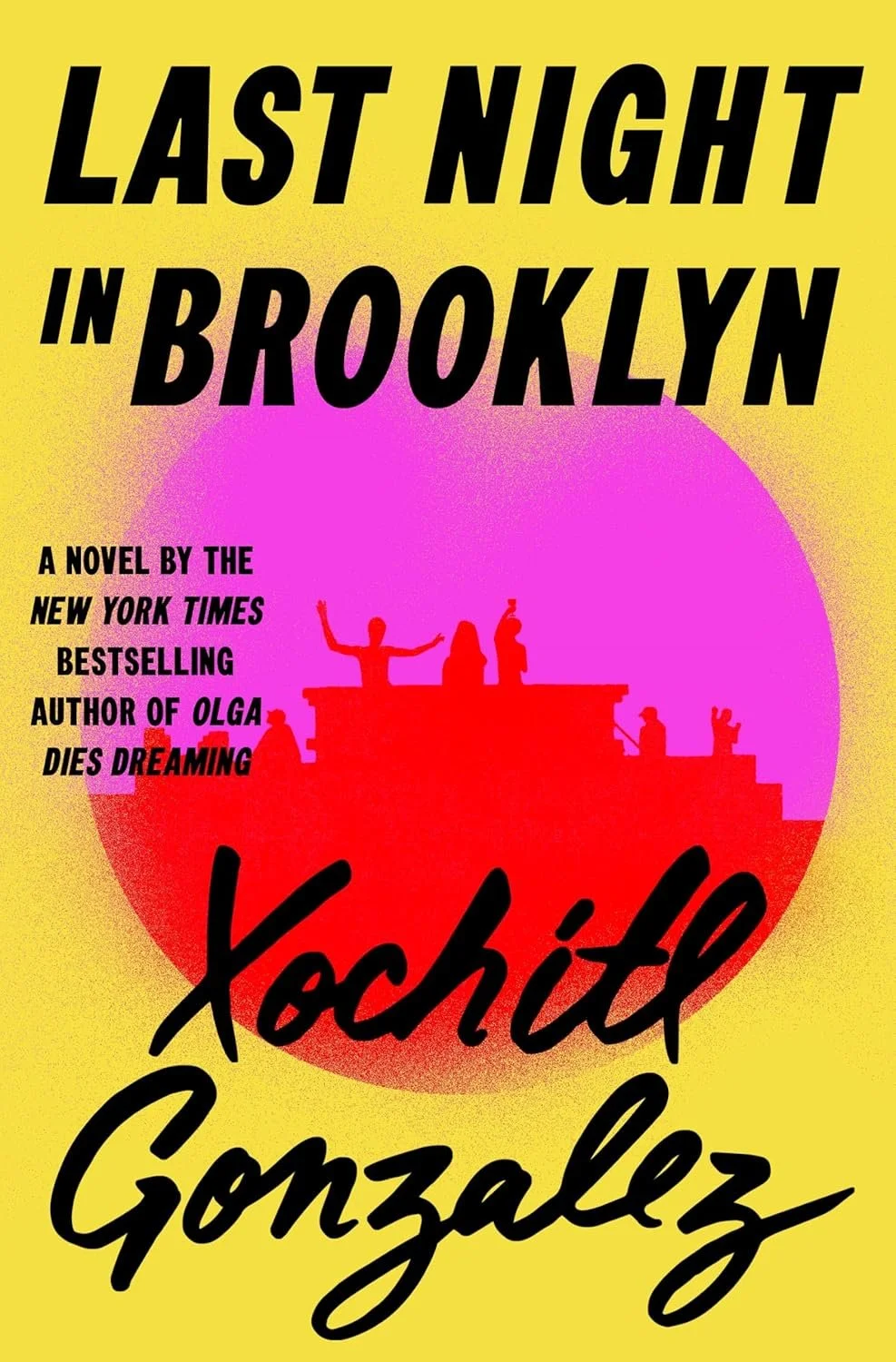
Last Night in Brooklyn, by Xochitl Gonzalez (Library Catalog)
Xochitl Gonzalez delivers a captivating story about a young woman whose life becomes ensnared in her glamorous neighbor's secret past. At twenty-six, Alicia Canales Forten feels smothered by her future. She's in a long-distance relationship, living at home with her mother's beliefs, saving up for her wedding to a future doctor. But after Alicia ventures out one night in the neighborhood of Fort Greene, Brooklyn, she finds herself lured by the siren song of youth and possibility that the striving crowd of creatives holds, and moves in.No one embodies this milieu more than La Garza, a larger-than-life, up-and-coming fashion designer whose epic house parties fuel neighborhood lore. La Garza's life, observed by Alicia from her apartment across the street, seems to hold the allure and fearlessness Alicia has never dared to imagine for herself.
But when Alicia's wealthy banker cousin moves to the neighborhood, she finds herself increasingly drawn into both his and La Garza's precarious lives. Against the 2007 backdrop of a potentially life-changing presidential election and a looming once-in-a-generation fiscal crisis, Last Night in Brooklyn explores the dark compromise of the American Dream for people of color living, unknowingly, in the twilight of a cultural moment. It is a story about everything money can buy—and the destruction of what it can't.
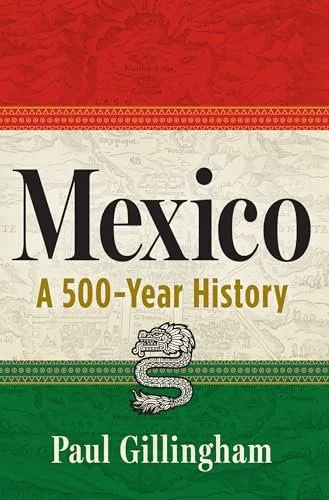
Mexico: A 500-Year History, by Paul Gillingham (Library Catalog)
At the beginning of his masterful work of scholarship and narration, Paul Gillingham writes, from its outset "Mexico was more profoundly, globally hybrid than anywhere else in the prior history of the world." Over the ensuing five centuries, Mexicans have prefigured and shaped the course of human lives across the globe.
The history of Mexico has been, Gillingham shows, one of suffering empire but also of overcoming. Through it all the country set new standards for inclusivity, for progressive social policies, for artistic expression, for adroitly balancing dictatorship and democracy. While racial divides endured, so too did indigenous peoples, who enjoyed rights unthinkable in the United States. Mexico was among the first countries to abolish slavery in 1829, and Mexicans elected North America's first Black president, Vicente Guerrero, its only indigenous president, Benito Juárez, and its only woman president, Claudia Sheinbaum.
As elegantly written as it is powerful in scope, rich in character and anecdote, “Mexico” uses the latest research to dazzling effect, showing how often Mexico has been a dynamic and vital shaper of world affairs.
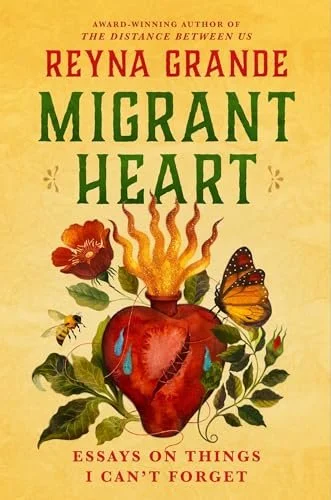
Migrant Heart: Essays About Things I Can’t Forget, by Reyna Grande (Library Catalog)
Reyna Grande has spent her career capturing the raw reality of life across borders. In this intricate and deeply intimate memoir-in-essays, the author of the landmark memoirs “The Distance Between Us” and “A Dream Called Home” again turns her gaze inward to explore the scars left by migration and the ongoing work of stitching herself back together.
With her signature blend of sophistication and raw honesty, Grande interrogates how living between two nations, two languages, and two identities has shaped the woman, mother, and writer she has become. Moving from the legacy of violence in her hometown of Iguala, Mexico, to a bittersweet family vacation in Europe spent reconciling her own impoverished past with her children’s world of abundance, she uncovers startling truths about the nature of survival.
Whether being racially profiled in the Arizona borderlands or finding unexpected wisdom from the slugs in her garden, Grande unflinchingly asks: How do we bridge the gap between who we were and who we have become? How do we turn pain into power? When memory threatens to define us, how can we use story to heal while still honoring our boundaries?
“Migrant Heart” is a powerful testament to Grande’s role as a storyteller and cultural witness. It expands our understanding of life in the United States and the complex people who cross and live within its borders. It is an essential read for the seekers, the dreamers, and anyone who believes in the enduring, transformative power of finding one’s voice.
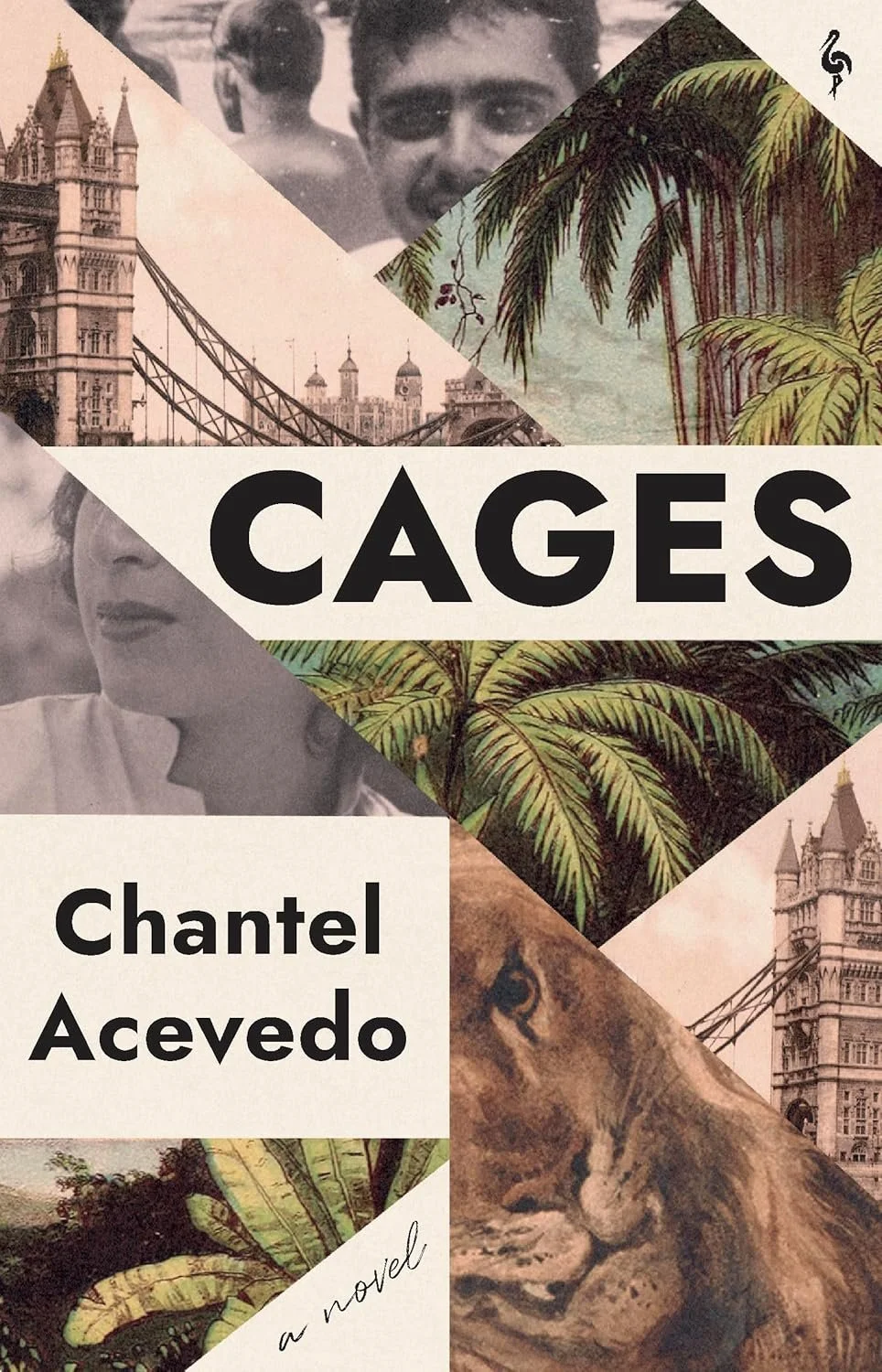
Cages, by Chantel Acevedo (Library Catalog)
Cages is a sweeping, polyphonic portrait of a man seen through the eyes of those who loved him, feared him, and betrayed him. At its center is Felix—a zookeeper in 1960s Cuba, an exile in London, and finally a dying man in Miami. His story is pieced together like a puzzle that can never fully be solved by one who knew him only as an absence and seeks to know him before it is too late.
In Cuba, during the Missile Crisis, Felix risks everything for an illicit love affair with René, a fellow keeper. In a society where homosexuality is branded “counterrevolutionary,” their tenderness unfolds in the shadow of danger, betrayal, and political oppression. In London, Felix and his wife Anabel navigate exile and reinvention, while an aspiring actress named Claudia finds herself drawn into their orbit, her ambitions and desires colliding with Felix’s own hunger for connection. Years later, Virgilio—Anabel’s devoted brother—recounts the disintegration of Felix’s marriage and the exile that follows, even as he steps in to protect the family Felix abandoned.
From Anabel, long silent about her complicity in the events that forced Felix’s flight from Cuba, to Rita, the daughter who knew him differently, each voice brings a sliver of truth. Together, these testimonies form a mosaic of longing, deception, survival, and reconciliation.
Spanning Havana, London, and Miami, Acevedo’s luminous, formally inventive novel explores exile, forbidden love, fractured families, the nature of truth, and the stories we tell to make sense of the people we cannot forget.
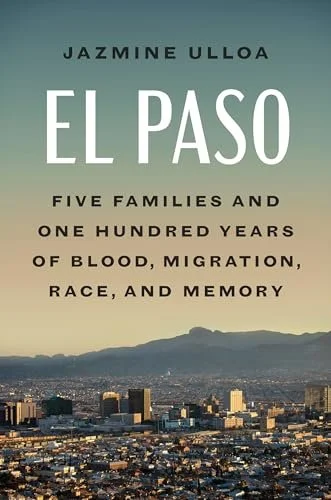
El Paso: Five Families and One Hundred Years of Blood, Migration, Race, and Memory, by Jazmine Ulloa (Library Catalog)
El Paso has been called the “Ellis Island” of America’s southern border, a mountain pass cum border town cum bifurcated metropolis where past meets future, and disadvantage meets opportunity, or so the promise goes.
El Paso is an extraordinary, can’t-look-away reported history; it uses deep research and dozens of new interviews to blow away the myth of this place, where Mexico’s Juarez and America’s El Paso intertwine. It charts the history of El Paso through five families. From the Mexican Revolution and the Mexican Repatriation, to the shifting immigration laws under Reagan and Trump and the violence and bloodshed brought on by the drug war, El Paso captures a place often misunderstood or forgotten by the rest of the country, and the world. It is a brave new work of narrative nonfiction that gives new voice and perspective to history that has long been checked at the border, or told through the lens of white men alone. Ulloa draws upon meticulous research and reporting and stunning historical detail to craft the intimate narratives of an unforgettable cast of characters.
This Is the Only Kingdom, by Jaquira Díaz (Library Catalog)
From the Whiting Award-winning author Jaquira Díaz, an epic novel of a mother and daughter wrestling with the aftermath of a murder, set against the backdrop of a tightknit, working-class barrio in Puerto Rico.
When Maricarmen meets Rey el Cantante, beloved small-time Robin Hood and local musician on the rise, she begins to envision a life beyond the tight-knit community of el Caserío, Puerto Rico – beyond cleaning houses, beyond waiting tables, beyond the constant tug of war between the street hustlers and los camarones. But breaking free proves more difficult than she imagined, and she soon finds herself struggling to make a home for herself, for Rey, his young brother Tito, and eventually, their daughter Nena. Until one fateful day changes everything.
Fifteen years later, Maricarmen and Nena find themselves in the middle of a murder investigation as the community that once rallied to support Rey turns against them. Now Nena, a teenager haunted by loss and betrayal and exploring her sexual identity, must learn to fight for herself and her family in a world not always welcoming. For lovers of Elena Ferrante's Neapolitan novels, “This is the Only Kingdom” is an immersive and moving portrait of a family – and a community – torn apart by generational grief, and a powerful love letter to mothers, daughters, and the barrios that make them.
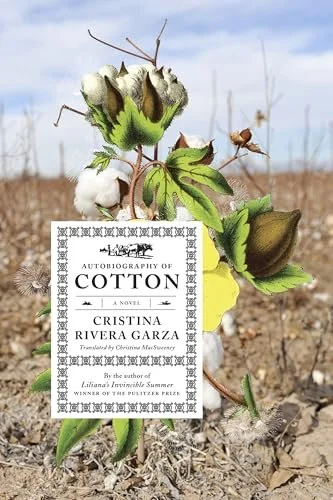
Autobiography of Cotton, by Cristina Rivera Garza (Library Catalog, Hoopla)
In 1934, a young José Revueltas traveled to Tamaulipas to support the cotton workers’ strike in Estación Camarón, which became the basis of his landmark novel Human Mourning. In her own groundbreaking novel Autobiography of Cotton Cristina Rivera Garza recounts her grandparents’ journey from mining towns to those same cotton fields as it intersects with Revueltas’s life in a vivid and evocative history of cotton cultivation along the Mexico-US border.
Through archival research and personal narrative, Rivera Garza chronicles the way cotton transformed the borderlands by reconstructing the cotton workers’ strike and reveals how cycles of deprivation and ecocide persist across generations. Deeply personal and politically acute, Rivera Garza crafts a new kind of border novel that tells how a brittle land radically altered her grandparents’ lives and the territories they helped develop. An intimate fictionalization, Autobiography of Cotton reveals a rich social history of agricultural colonization, labor activism, environmental degradation, and cross-border migration.
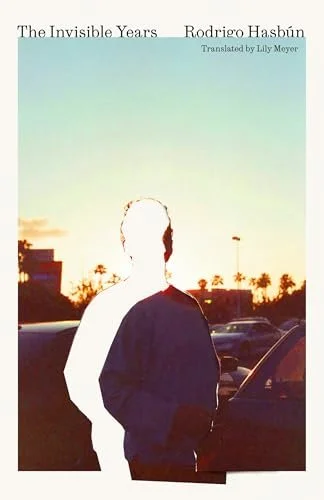
The Invisible Years, by Rodrigo Hasbún, translated by Lily Meyer (Library Catalog, Hoopla)
Andrea and Julián haven’t seen one another in twenty-one years—not since that tragic, fateful night their senior year of high school that marked their group of friends forever. A shocking phone call brings the two together again in Houston, where they begin to unravel the truth of that year, picking open long scabbed-over wounds from their upper-class adolescence in 1990s Bolivia and the scandal that ripped them apart.
A writer unhappy in his career and his marriage, Julián has been novelizing the past for his next book, trying to make meaning out of the events that changed the course of their lives forever. “I’d thought that writing about that time would free me, relieve the burden of the invisible years,” he writes, “but often it seems that it’s done the reverse.” Juxtaposing the naïve invincibility of adolescence with the grasping uncertainties of adulthood, The Invisible Years deftly weaves a coming-of-age tale that leaves the reader hanging on every word, even as they know how the cards fall in the end.
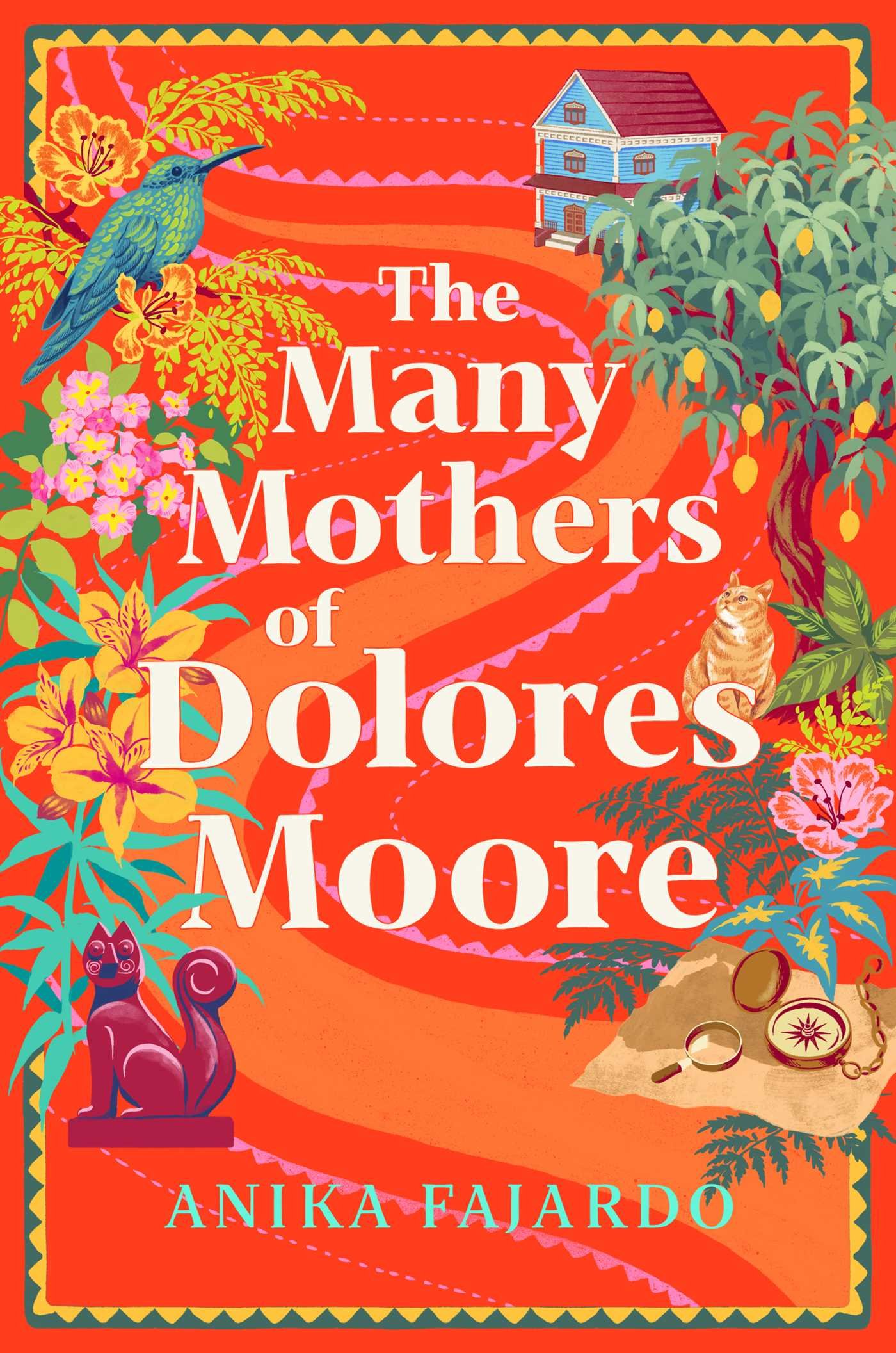
The Many Mothers of Dolores Moore, by Anika Fajardo (Library Catalog)
For fans of Rebecca Serle and Elizabeth Acevedo, a magically insightful novel about a woman's journey to discover her roots and what it means to carry our ancestors with us.
In the span of a year, Dolores Moore has become a thirty-five-year-old orphan. After the funeral of the last living member of her family, Dorrie has never felt more lost and alone. That is, except for a Greek chorus of deceased relatives whose voices follow her around giving unsolicited advice and opinions. And they’re only amplifying Dorrie’s doubts about keeping the deathbed promise she made to return to her birthplace in Colombia.
Fresh off a breakup with her long-term boyfriend, laid off from her job as a cartographer, and facing a daunting inheritance of her mothers’ aging Minneapolis Victorian and two orange tabbies, how can she possibly leave the country now? But when an old flame offers to housesit, the chorus agrees that there’s no room for excuses. Armed with only a scrap of a handdrawn map, Dorrie sets off to find out where—and who—she came from.
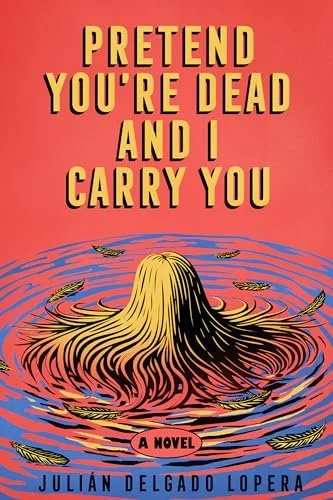
Pretend You’re Dead and I Carry You, by Julían Delgado Lopera (Library Catalog, Hoopla)
From the award-winning author of Fiebre Tropical, an electric, highly anticipated novel set in Colombia’s underground queer scene. Isolated in a dreary Bogotá apartment, Ignacio’s light has dimmed, leaving his teenage daughter Valentina to raise herself in the wake of her mother’s death. Valentina longs to discover the details of her mother’s drowning and for Ignacio to snap out of his depression—his listless afternoons spent smoking cigarettes in long blonde wigs, telenovelas humming in the background, haunted by memories of the young man he loved and betrayed.
From Ignacio’s dark past emerges the luminous Mamadora Eléctrica, the wise travesti who introduced Ignacio to the city’s queer scene years prior. Stepping into a maternal role for Valentina, Mamadora fears that Ignacio’s self-loathing may have unleashed a curse on them all. A profound and irreverent story about coming undone, Pretend You’re Dead and I Carry You affirms Julián Delgado Lopera as a brilliant and singular voice—“a writer who is grinding their own colors” (Dwight Garner, The New York Times).
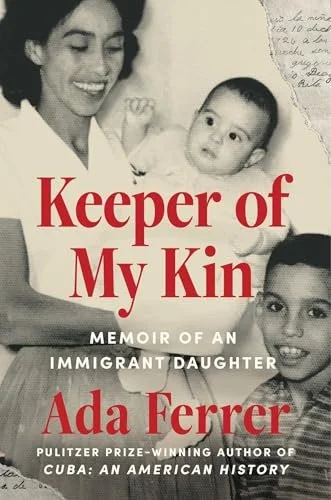
Keeper of My Kin, by Ada Ferrer (Library Catalog)
From the Pulitzer Prize–winning author of Cuba: An American History comes a heartbreaking yet redemptive memoir about migration, separation, and the love of one family forcing its way through the fissures of history.
In 1963, four years after Fidel Castro came to power, Ada Ferrer’s mother made the agonizing decision to flee Cuba with her infant daughter, Ada, and to leave behind her nine-year-old son, Poly. That moment was but a ripple in a much larger story of a world historical revolution. Yet, in another more intimate family history, that choice was a crossroads, ultimately inseparable from who and what they all became.
In this beautiful memoir, Ferrer masterfully shifts between her roles as historian and family member, weaving a multigenerational tale that reaches into the past to understand the circumstances and choices that led to the present. We see key historical events through the eyes of the the grandmother who raised Poly after Ada’s departure, a Black woman born a year after the end of slavery in Cuba; Ada’s parents, forced to invent themselves anew in a foreign land; and two brothers left behind—Poly and another, once-secret brother named Juan José, both of whose lives were marked irrevocably by revolution and family separation. Moving between Cuba and the United States and then back again, the book unpacks the experience and emotion of migration, in the moment of separation and over the long-term, for those who left and those who stayed.
Using a treasure trove of letters written across the gulf of family separation and found after the death of Ada’s parents, as well as government documents acquired through Freedom of Information Act requests, Ferrer offers us a profound reflection on belonging, memory, and the lasting imprint of history.
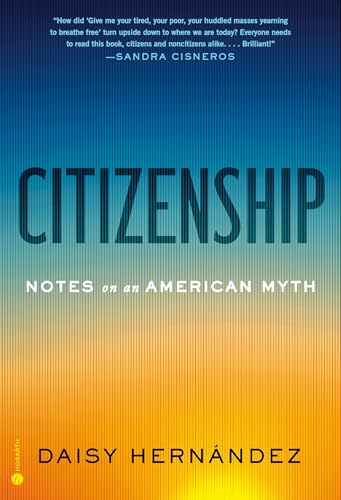
Citizenship: Notes on an American Myth, by Daisy Hernández (Library Catalog)
In this one-of-a-kind book, Daisy Hernández fiercely interrogates one of the most complicated subjects of contemporary life and citizenship. Braiding memoir, history, and cultural criticism, she exposes the truths and lies of how we define ourselves as a country and a people. Turning to her own family's stories—her mother arrived from Colombia, her father a political refugee from Castro's Cuba—Hernández shows how the very idea of citizenship is a myth and part of the stories we tell ourselves about the American soul and psyche.
Reframing our understanding of what it means to be an American, Citizenship is an urgent and necessary account of the laws, customs, and language we use to include and exclude, especially those who come from Latin America. With her scholar's mind and memoirist's gift for narrative, Hernández weaves a story both personal and national, while reckoning with our country's ongoing debate about who belongs and providing fresh ways of thinking about citizenship. At once bracing, fearless, and tender, Citizenship is a powerful portrait of one family's experiences in the borderlands of citizenship and an honest illumination of the country in which we live.
Note: Although not in the library catalog yet, look for One Hundred Guinea Pigs by Gustavo Rodriguez, coming soon, and Ply, the newest book by Pulitzer Prize winner Hernan Diaz; The King of Aloe Vera by Tomas Moniz; and Something Followed Us Home: Tales of Latiné Horror, all coming out September 29.
- Compiled by Louis Muñoz