
Suggested Reading for Autism Acceptance Month
Malia Herman, Deputy Mayor of Maplewood Township, asked me to put together this suggested reading list for Autism Acceptance Month. For each age group, I’ve selected three fiction titles and three nonfiction titles. To give some other titles a chance to shine, I avoided including books that are already in the Neurodiversity-Affirming Book List, which you can find by clicking here.
Sincerely,
Your Teen Librarian
Children's Books
Nonfiction
Fiction
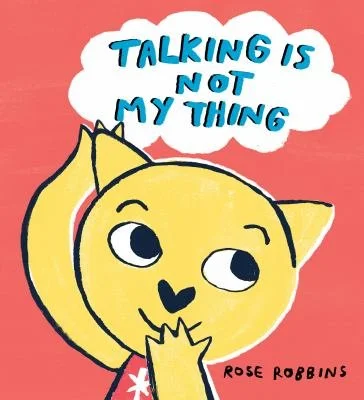
Talking Is Not My Thing by Rose Robbins (Catalog Link)
There is a saying that not all autistic people talk, but all autistic people communicate. The unnamed protagonist of this book is nonspeaking, communicating with the reader through thought bubbles. To her family, she expresses herself through a form of Augmentative and Alternative Communication (AAC): flashcards with pictures. Throughout lively games and the crisis of losing a stuffed animal, her family supports, includes, and accommodates her. Rather than focusing on the difficulty of not being able to speak, the narrative emphasizes her playful personality and ability to engage others in her own way.
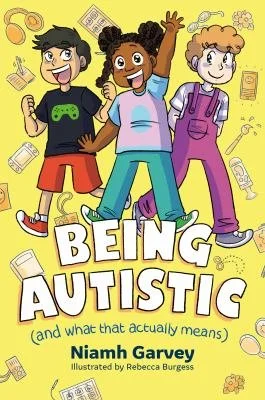
Being Autistic (And What That Really Means) by Niamh Garvey (Catalog Link)
Intended for kids who have been identified as autistic, this book explains autism in a way that is simple without being condescending. The book is well-balanced between text and visuals, and it shows that all different kinds of people can be autistic. The author describes common autistic traits, as well as concepts such as neurodiversity. Overall, the tone is reassuring and positive.
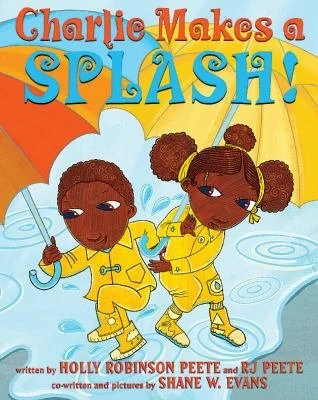
Charlie Makes a Splash by Holly Robinson Peete (Catalog Link | eBook Link)
People on the autism spectrum can have senses that are more, well, sensitive than those of neurotypical people. This book explores the sensory joys of water. Whether running water over his hands, splashing in a puddle with his twin sister, or admiring creatures large and small in an aquarium, Charlie thrives with all things aquatic.
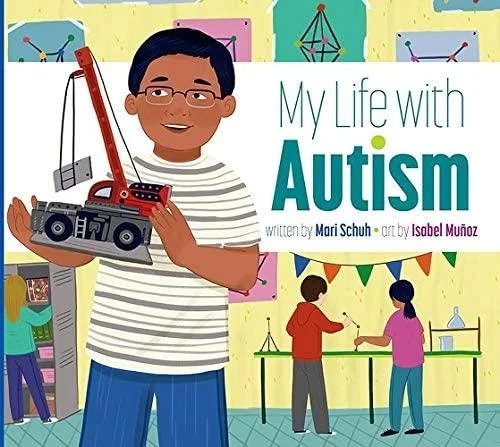
My Life with Autism by Mari Schuh (Catalog Link)
“Hi! My name is Zen, and I’m a kid, just like you,” is the engaging opening of this short and sweet book. Zen walks the reader through what autism is, giving concrete examples of the ways he and other autistic people might behave. He shares his love of computers and video games with the audience. Though he had challenges making friends before, he shows how he became a social butterfly with the other kids in his science club.
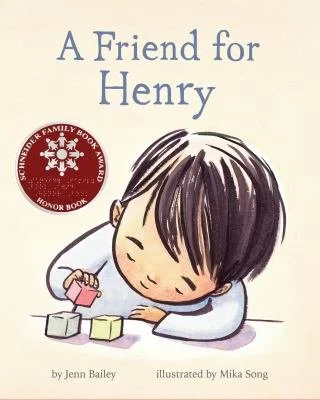
A Friend for Henry by Jenn Bailey (Catalog Link | eBook Link)
Many autistic people struggle to make friends, despite wanting friendship. Henry looks to the other kids in his class to find a playmate. Over and over, his would-be friends misunderstand his intentions, or vice versa, Through persistence, however, he succeeds in the end.
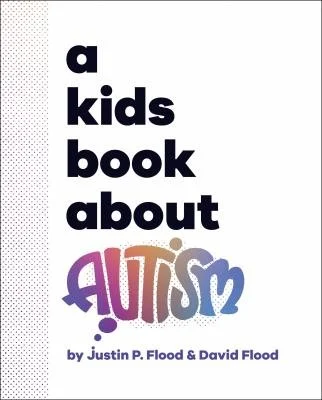
A Kids Book About Autism by Justin P. Flood & David Flood (Catalog Link)
Father and son co-authors David and Justin bring us this simple, yet effective book. Their target audience is allistic (non-autistic) kids who may be interacting with autistic people with the first time. “We hope this book inspires everyone to pause before judging others,” they write in the “Intro for grownups.”
The graphic design is appealing, full of large-type and simple shapes and gradients. Justin, who is autistic, shares how he feels and what he thinks in ways that invite the reader to identify common ground, while also respecting difference.
Young Adult Books
Nonfiction
Fiction
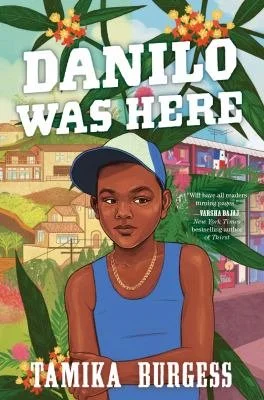
Danilo Was Here by Tamika Burgess (Catalog Link | eBook Link | Audiobook Link)
It’s the 1990s, and Danilo, a Black boy from Panama, has decided to participate in a baseball program in California. Though the program’s coach recruited him for his stellar performance in the sport, Danilo is motivated not by improving his athleticism, but by finding his dad, who traveled to the US and eventually stopped keeping touch with Danilo, his mom, and his sister.
Danilo’s host family in California have an autistic son, Grayson. When Danilo learns that Grayson is autistic, he doesn’t know what that means at first. All he knows is that Grayson has not been very warm towards him. Towards the end of his stay, though, Danilo gets to attend music therapy sessions with Grayson, and the two bond over their shared love of the accordion.
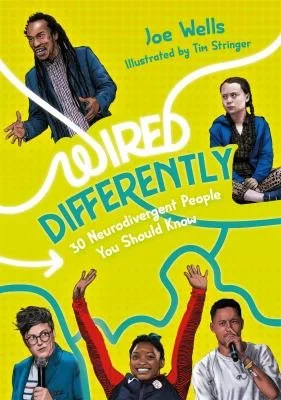
Wired Differently: 30 Neurodivergent People You Should Know by Joe Wells (Catalog Link)
Wells opens this book with the line “No one in this book is normal.” As a neurodivergent person, Wells has always craved community with people like him, people who are, as his mom puts it, are “wired differently.” The brief biographies collected here encompass people of a variety of neurodivergent experiences (dyslexia, dyspraxia, ADHD, and autism). Their stories demonstrate not only a wide range of careers and areas of influence, but also the positive and helpful aspects of their neurotypes.
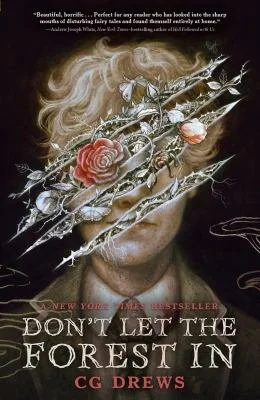
Don’t Let the Forest In by CG Drews (Catalog Link | eBook Link | Audiobook Link)
Andrew and his twin sister Dove are Australian students attending an elite boarding school in Virginia. There, Andrew becomes best friends with Thomas, and the two begin creating twisted horror stories together, with Andrew writing and Thomas illustrating. However, in their senior year, Dove stops talking to Andrew, and he can’t understand why. Meanwhile, the monsters Thomas drew for Andrew’s stories are starting to come to life in the nearby forbidden forest, threatening the safety of everyone at the boarding school.
CG Drews is a nonbinary autistic author, known for their works The Boy Who Steals Houses and Hazelthorn. Andrew is autistic-coded, meaning he has several autistic traits, but is never explicitly said to be autistic.
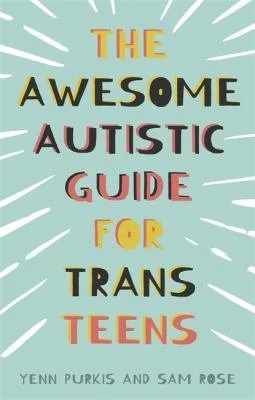
The Awesome Autistic Guide for Trans Teens by Yenn Purkis and Sam Rose
Did you know there is a large overlap between autistic and trans people? In fact, according to research cited in this book, “autistic people are seven times more likely to be trans or gender divergent than non-autistic people.” With its short length, readable font, frequent use of bulleted lists, and friendly writing style, this book is incredibly approachable. The shortness of this book belies how packed with information it is. It’s full of glossaries, short journal prompts, organization directories, and helpful websites, making it a useful resource for autistic trans teens, as well those who care for and about them.
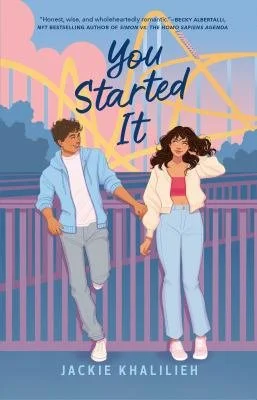
You Started It by Jackie Khalilieh (Catalog Link)
Jamie Taher-Foster is not an adventurous person, but she wants to change that. Now in her senior year, she’s ready to tackle her bucket list with Ben, her boyfriend of three years. But when Ben unexpectedly breaks up with her and begins dating someone else, she is so distraught that she accidentally runs over a bicycle belonging to Axel, a boy who just moved to the neighborhood. Jamie offers to save up to pay to fix the bicycle, if she can curb her expensive book-buying habit, that is. In exchange Axel agrees to pretend to be her boyfriend and complete items on her bucket list to make Ben jealous.
This is autistic author Jackie Khalilieh’s second book, after Something More.
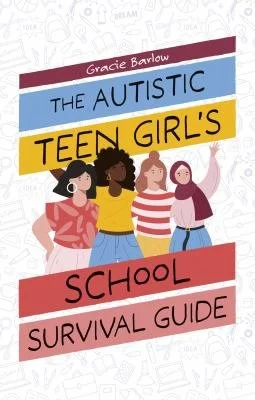
The Autistic Teen Girl’s School Survival Guide by Gracie Barlow (Catalog Link)
Similar to The Awesome Autistic Guide above, this is a brief, but informational and well-organized resource. The author covers all kinds of school interactions that can be challenging for autistic students, such as making friends, managing assignments, and maintaining one’s physical and mental health. The text and diagrams are easy to understand, and the organization of the guide makes it easy to refer back to particularly useful passages. I would have loved to have this book as a teen.
Adult Books
Fiction
Nonfiction
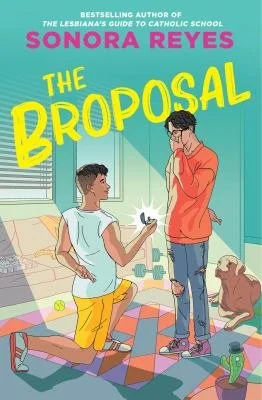
The Broposal by Sonido* Reyes (Catalog Link)
Han (short for Alejandro) and Kenny are roommates and best friends. When Han unexpectedly loses his job, which had promised to sponsor a work visa for him, he’s not sure how he can continue to stay in the US. Kenny, fresh from his breakup with his long-time biphobic and abusive girlfriend, proposes marriage to Han so the latter can get a Green Card. Since they’re such close friends, they know they can easily answer the immigration officials’ questions about their relationship. Han has never dated anyone before and thinks that he’s straight, though, so surely no one will catch feelings … right?
Sonido Reyes is a nonbinary autistic author, and Han is autistic as well. This is Reyes’ adult debut, after having published YA books such as The Lesbiana’s Guide to Catholic School.
*Sonido changed their name in early 2026, saying in their website bio “Sonido’s pre-evolution form was called Sonora Reyes.”
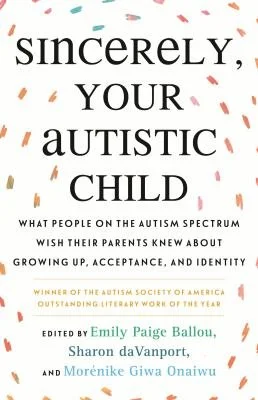
Sincerely Your Autistic Child, Edited by Emily Paige Ballou, Sharon da Vanport, and Morénike Giwa Onaiwu (Catalog Link)
A bit deceptively named, this book is a collection of autistic women and nonbinary people from all walks of life. The authors reflect on what they wish they had known as children, as well as what they wish parents and guardians of autistic children to know. The diversity of the perspectives collected means there is a story for everyone here.
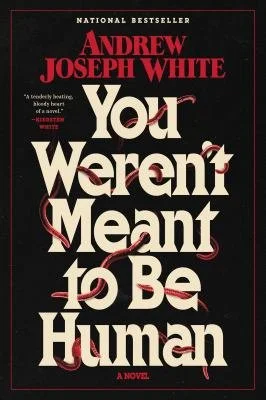
You Weren’t Meant to Be Human by Andrew Joseph White (Catalog Link | eBook Link)
Crane, a nonspeaking autistic trans man, is part of a community that serves a hive: a mass of worms of mysterious origin in a dank basement. The hive speaks and demands regular deliveries of corpses. This hive is just one of an unknown number spread throughout the Appalachian Mountains. Against a backdrop of daily news about government restrictions on reproductive and gender-affirming care. Crane has started taking testosterone and plans to continue medically transitioning. Those plans are interrupted when he becomes pregnant, and the hive requires him to carry the pregnancy to term.
Andrew Joseph White is an autistic trans man from West Virginia, and his protagonists tend to also be autistic trans masculine characters, often living in the Appalachian region.
Understanding Autistic Relationships Across the Lifespan by Felicity Sedgwick and Sarah Douglas (Audiobook Link)
When it comes to autism, a great deal of media and research attention focuses on autistic children. However, autistic children grow into autistic adults, and once that happens, it can be difficult to find relevant information and resources. Enter: Understanding Autistic Relationships Across the Lifespan. Sedgewick and Douglas combine interviews alongside examinations of existing research to create a fuller picture of the shapes an autistic person’s life might take. The authors also identify several areas where more research is needed.
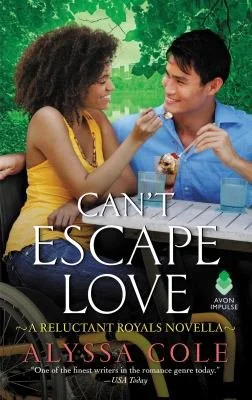
Can’t Escape Love by Alyssa Cole (Catalog Link | eBook Link | Audiobook Link)
Regina, a successful media blogger, is struggling with insomnia. The only thing that helps her sleep these days is the sonorous voice of livestreamer whose channel is devoted to solving puzzles. However, one day she logs on to find that all of this livestreamer’s videos have been taken down.
When she manages to contact him, not only does the livestreamer, called Gus, agree to talk to her on the phone until she falls asleep each night, but it also turns out he lives just a few blocks away from her New York apartment. In their conversations, they learn that Gus was hired to make an escape room based on an anime that happens to be Regina’s favorite, but that he’s never gotten into. It looks like they’ll have to put their two nerdy brains together to make an escape room everyone will be talking about.
Alyssa Cole is a prolific romance and thriller author with ADHD. This novel features a romance between two disabled characters: Regina, who is a wheelchair user, and Gus, who is autistic.
Self-Care for Autistic People by Dr. Megan Anna Neff (Catalog Link)
Written by an autistic psychologist, this book is a collection of over 100 self-care ideas, for autistic people, by autistic people. Typical self-care guides are often written with allistic (non-autistic) people in mind, and therefore may not address specific autistic experiences, such as recovering from masking or avoiding meltdowns or shutdowns. Along with tips, Dr. Neff shares neuroscience information and relevant personal anecdotes. Adults whose autism was not identified in childhood may find this book especially useful.
P.S. A note on language: Some people refer to April as “Autism Acceptance Month,” and others say, “Autism Awareness Month.” Autism Society of America (now, the Autism Society) created National Autistic Children’s Week in 1972. It was later expanded to Autism Awareness Month. In 2021, the Autism Society officially rebranded it to Autism Acceptance Month, Several organizations, such as the Autistic Self Advocacy Network (ASAN) and the Autistic Women and Nonbinary Network (AWN), had already been using this language for several years.
Obviously, awareness and acceptance of autism are both important. However, many have pointed out that the term “awareness” can be stigmatizing. People often establish awareness months—for instance, National Colon Cancer Awareness Month in March or Domestic Violence Awareness month in October—for problems in society they would like to solve. Many autistic self-advocates consider autism to be an intrinsic part of themselves, something that can’t and shouldn’t be changed. For that reason, I refer to this month as Autism Acceptance Month.